As I deliver lectures and courses for various organizations, including Penfield Rec’s DEAR program, I post stuff here that might be of interest to students and attendees.
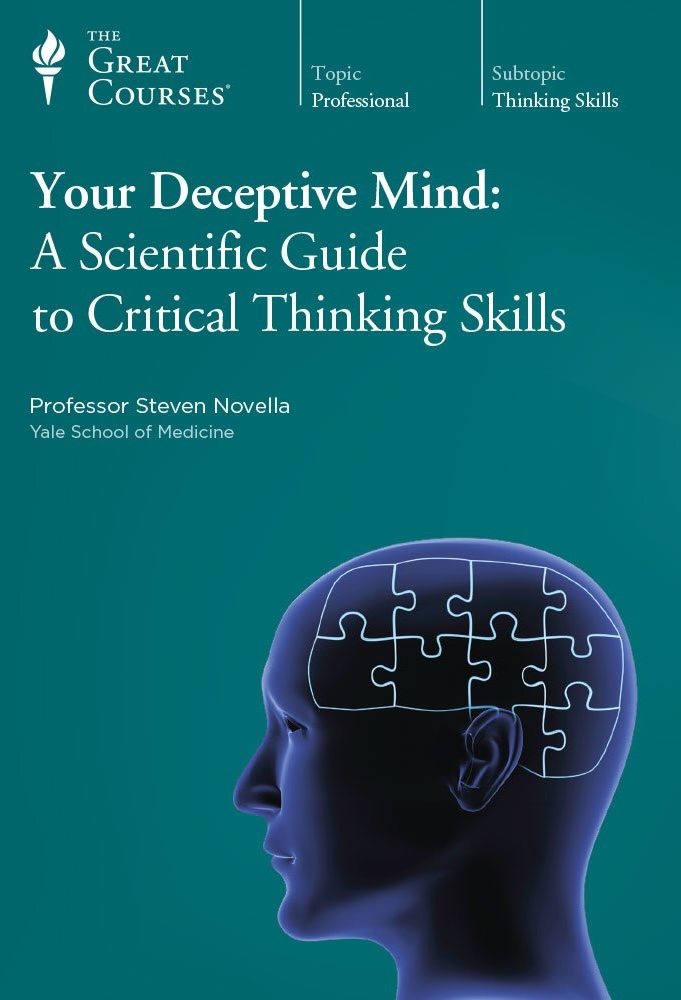
Your Deceptive Mind: A Scientific Guide to Critical Thinking Skills – No skill is more important in today’s world than being able to think about, understand, and act on information in an effective and responsible way. What’s more, at no point in human history have we had access to so much information, with such relative ease, as we do in the 21st century. But because misinformation out there has increased as well, critical thinking is more important than ever. By immersing yourself in the science of cognitive biases and critical thinking, and by learning how to think about thinking (a practice known as metacognition), you’ll gain concrete lessons for doing so more critically, more intelligently, and more successfully.

How Jazz Works – Jazz is widely regarded as the only truly original American art form. It emerged from a mashup of musical genres like blues, ragtime, and spirituals in African American cultures of the early 20th century, and it has evolved into a broad variety of styles that permeates every type of music today. The defining aspect of jazz is improvisation, which requires musicians to listen and respond to each other spontaneously as they create unique performances in real time. However, most jazz styles place improvisation in a framework that brings order to the potential chaos. This lecture will explore where jazz came from and how jazz musicians hear the world.
Click Here for resources I posted for a series I did in 2022, included recommended books and 20 desert island recordings.
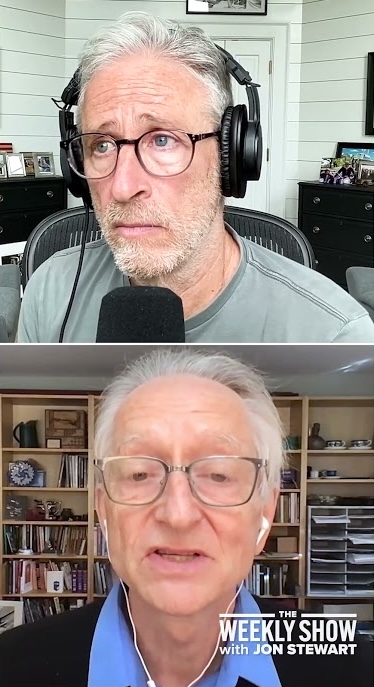
AI Update – Generative Artificial Intelligence continues to progress, amaze, confuse, and terrify as society tries to cope with a technology that is changing everything. As is still the case with AI, throughout its 70-year history, unfounded hype dominates much of the discussion but truly profound successes have been realized. This session will try to separate hype from reality and explain at a general level what’s currently going on in the rapidly changing AI arena, both from a technical and a societal perspective. To do so, we’ll sample Jon Stewart’s excellent interview of Geoffrey Hinton, the “Godfather of AI,” from an episode of his podcast. Click here to view the entire 98-minute interview.
Critical Thinking – Critical thinking is the rigorous process of actively and skillfully evaluating and applying information gathered from observation, experience, or reasoning, as a guide to belief and action. It is based on universal intellectual values: clarity, accuracy, consistency, relevance, sound evidence, and fairness. It is also in very short supply these days. This course will explore perspectives and skills intended to help you become a more critical thinker. We’ll start with Daniel Kahneman’s Nobel-winning work on the two systems our brain provides, and then progress to discussions of evidence, logic, and reasoning.

Tanzanian Adventure Travelogue – In the summer of 2016 Al and his wife, Susan Herzberg, travelled to Tanzania to visit their daughter, Christine Biles, who was in the second year of her Peace Corps service in Isitu, a village at the end of a non-road in the southern highlands. After spending a couple of days in the village, they made their way to Ngorongoro Crater, Oldupai Gorge, Serengeti National Park, and Zanzibar before returning to Dar Es Salam to begin their flight home. Needless to say, they took some pictures, which they’ll share as they narrate their adventures.

Day of Ancient Games – DEAR FUNdraiser and infomercial talk on 6 ancient games that we played on this auspicious day!
Making Decisions the Bayes Way – The Reverend Thomas Bayes, an 18th-century English non-conformist, invented a simple statistical theorem that handles conditional probabilities in the context of new evidence. Since that time, Bayes’ Theorem has always been controversial, but it has stubbornly survived numerous attempts from the statistical establishment to kill it off. It is currently alive and well and has become the go-to technique for modern decision sciences when a decision must be made with less evidence than one would desire. This talk will work through some examples of Bayesian inference, including the Monty Hall problem, in order to provide some insights into statistical thinking, which is a key component of critical thinking. No math required, just a little arithmetic.
- Scene from 21 (2008) – Scene shown in the lecture that explains the Monty Hall problem.
- Monty Hall Speaks – Interview segment where he describes what he actually did on the show, along with the trolling of Marilyn vos Savant when she published the correct analysis.
- Marilyn vos Savant – In-depth coverage of the belligerent mansplaining from a huge number of math phd’s who, despite their credentials, placed themselves at the peak of Dunning-Kruger’s Mt. Stupid.
Facilitator Training Workshop – Friday, 14 Feb 2025, 10-2.
Free workshop for current and hopefully future DEAR program facilitators to encourage folks to put together and present programs (classes) for DEAR. I presented a session on preparing slides to enhance a presentation, using Google Slides. The Links below are to the Google slides presentation I ended up with, as well as videos I included therein. The last link is what I ended up with after the followup in June, where we attempted to deliver a hands-on tutorial-style workshop.
- Google Slides presentation I ended up with
- Google Slides for Kids, Episode 1 – Getting Started
- Google Slides for Kids, Episode 2 – Adding Style
- Google Slides for Kids, Episode 3 – Adding Animations
- Create Gmail account to get Google Cloud account
- Convert PowerPoint to Google Slides
- Google Slides Workshop, 20 June 2025
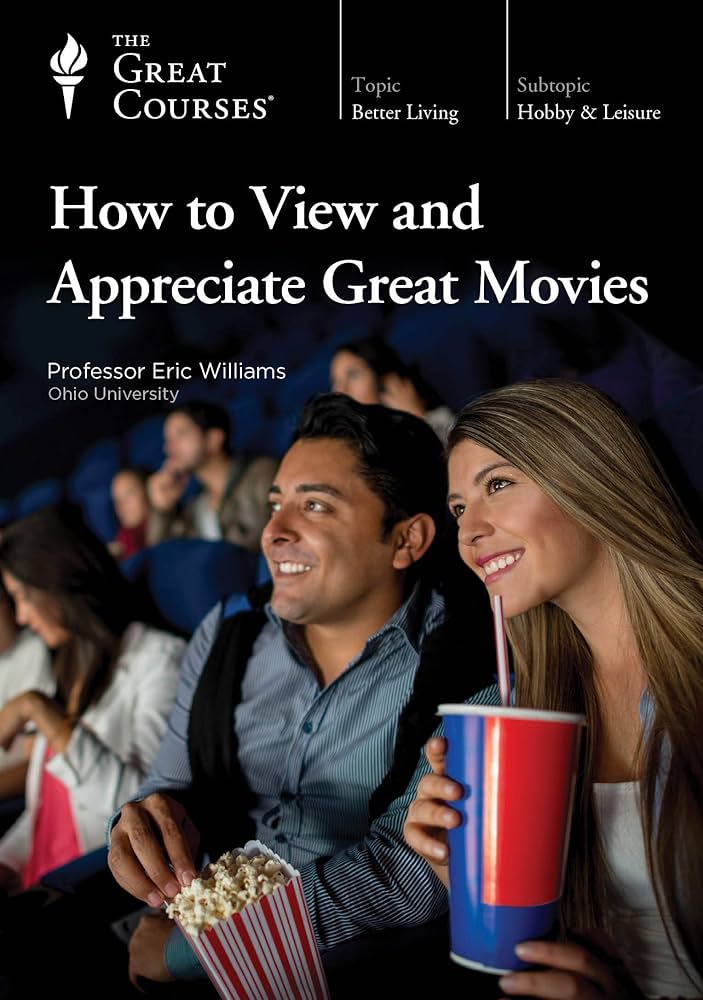
How to View and Appreciate Great Movies – You may sometimes wonder why a single scene from a movie stays with you long after the credits roll, yet in other cases, you can’t recall if you’ve even seen an entire film. Thinking about that memorable moment, what made that impression? Was it a particularly well-acted scene? The dramatic lighting? The emotion of the music? The tension that has built up? The ability to relate to the situation? A powerful choice of words? The answer is, simply, yes. Understanding the intent of every aspect of a movie—from lighting to language, color to characters, stars to scores—can help you not only appreciate the movies you’re watching at a much more profound level but also open your eyes to the multitude of ways you’re being manipulated from the moment you sit down in the theater. A great filmmaker controls every sensation the movie evokes— tremors or tears, goosebumps or giggles. And while this may feel orchestrated when you begin to pull back the curtain and discover the secrets behind making great movies, you’ll also learn why we invite and welcome that manipulation. Gain a new set of creative and analytical tools to bring with you to the movies, enhancing your enjoyment and viewing experience for any film.
The Theory of Everything: The Quest to Explain All Reality. The great theories of physics are like great works of art. And much like the greatest works of art, you don’t need to completely understand them in order to appreciate them. The unifying theories of physics are among the greatest and most complex in all of science; they stand as incomparable masterpieces in the gallery of modern thought. As you experience them, you will witness their progression toward ever-grander insights, pointing towards an as-yet-unfinished ultimate synthesis that will transform our understanding of the universe. Anyone, no matter what their training in science and mathematics, can appreciate this quest, which is nothing less than a search for the theory of everything.

Sound: How It Works and How We Work with It – Sound is maybe the most ephemeral medium. We can’t see it directly, and once it happens in real time, it’s gone, unless we somehow capture an approximation of it. This class is all about sound: in nature, on computers, from synthesizers, as music, and in movies and games. We’ll look at the physics and technology of sound, and we’ll listen to a lot of sounds you likely haven’t experienced before. The 5 sessions are:
The Science of Sound
Digital Audio Production
Synthesis
Computer Music
Sound in Movies and Games

Computing and AI: How to get Spock-like machines to behave like Kirk – Digital computers are built on a foundation of formal logic, which boils down to true or false with nothing in between. Most people struggle with formal logic, which is one reason computers are hard to use. Artificial Intelligence seeks to make computers behave like people, which, let’s face it, often precludes logic. This class will describe how digital computers work under the hood, how they are programmed to do stuff, and how their brittle logic can be softened to enable human-like behavior, which we call artificial intelligence. I’ll also update the startling capabilities and profound implications of generative AI systems that I presented in last spring’s Artificial Intelligence class (see below)

Jazzed about Jazz: Great Combos – The “combo” is the quintessential jazz performing group. Nominally it consists of a rhythm section (piano, bass, and drums) and one or more front-line instruments (often horns). This series will examine 4 essential jazz combos that were true collectives not dominated by one star player: Jazz Messengers, Modern Jazz Quartet, Clifford Brown/Max Roach Quintet, and Weather Report.
4 Men Hanging – In this somewhat personal history, Al will recount the lynching of 4 accused murderers in Ada, OK, on April 19, 1909, which was documented in a famous photograph that appeared around the world. Jim Miller, a notorious hired gun, had murdered A. A. “Gus” Bobbitt, a pillar of the community and former US Marshall. When the word got out that a prominent defense lawyer was on the way to defend Miller and his employers, the town reacted by hauling the 4 men out of jail and hanging them in a nearby livery stable. The personal connection is that Al’s grandfather, Hugh, who arrived in Ada in 1900 in a covered wagon, collaborated on a book about the event with Welborn Hope, who can be seen in the photo’s background, peering under a gate at the 4 men hanging.


Artificial Intelligence – Artificial Intelligence (AI) is everywhere in your everyday life, from driving your car to using your credit card, not to mention doing anything on Google, Amazon or Facebook. AI is also a loaded term whose meaning and impact are highly controversial. This 6-part course will explore what AI is and, maybe more importantly, what AI isn’t. We’ll chronicle AI’s history from the origin of the term in 1956 by focusing on four application areas where AI has achieved some notable successes: game playing, vision, human languages, and creativity. Each application area will introduce us to AI techniques that try to mimic what people do, and we’ll shed light on how those techniques actually work. The primary goal of the course is to disentangle what AI actually is and can do from the dense jungle of popular culture, which often overhypes, demonizes, and otherwise distorts AI’s accomplishments and potential. No mathematical, computing, or other technical skill or experience is expected.
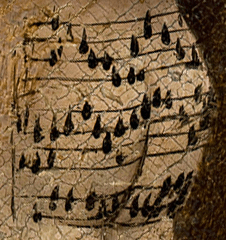
Music from the Garden: Butt Music from Hell – Hieronymus Bosch’s Garden of Earthly Delights has fascinated viewers for centuries. The Hell panel of this triptych features music notation inscribed on the backside of an unfortunate soul being crushed by a giant lute. What did this tune sound like and what could it possibly mean? Al will explore Bosch’s use of musical memes and focus on how he transcribed and rendered the Butt Music from Hell as an asset in a video game inspired by the Garden’s Hell panel.

Jazzed about Jazz: Making Arrangements – Jazz is defined by improvisation, but the settings in which great improvisations occur can be noteworthy as well. In this installment of Jazzed about Jazz, Al Biles will focus on four of the greatest composer/arrangers in jazz history: Duke Ellington/Billy Strayhorn, Gerry Mulligan, Gil Evans, and Maria Schneider.

Outsider Music Lunch Lecture – Al provides a sampler of outsider music. What is Outsider Music? Outsider music are songs and compositions by musicians who are not part of the commercial music industry who write songs that ignore standard musical or lyrical conventions, either because they have no formal training or because they disagree with formal rules. There is a niche market for outsider music, and such musicians often maintain a cult following. You’ll hear The Shaggs, Bingo Gazingo, The Legendary Stardust Cowboy, Shooby Taylor (the human horn), Swedish Elvis impersonator Eilert Pilarm, one-man band Luie Luie, and the grandmother of them all, Florence Foster Jenkins, subject of the 2016 biopic starring Meryl Streep. Given on Ground Hog Day, 2023. Here’s a link to outsider guru Irwin Chusid’s website.

Still Jazzed about Jazz – Continuation of the previous class described below. This series will focus on 3 trumpet players with contrasting styles from the mid-century modern period. Chet Baker quickly became the icon of cool in the early 1950’s with Gerry Mulligan’s quartet and had a long, if troubled, solo career. Lee Morgan (shown at left) was the quintessential hard bop soloist, both with Art Blakey’s Jazz Messengers and with his own groups. Booker Little was a brilliant modernist whose writing and arranging skills matched his innovative improvisational style.

Jazzed about Jazz – Jazz has been called “America’s only true original art form.” While this likely overstates things a bit, it is undeniable that jazz emerged in America and is a vital creative medium. In this series we’ll use great jazz recordings to survey the history, styles, personalities, and cultural impact of jazz. Join us to experience the joy of getting jazzed about jazz! No musical experience expected. Note: the last two sessions were added to link to the last two movies in Great Films, Great Scores. This series occurred at DEAR in spring, 2022.
The sessions were:
57 Varieties – So many different styles of jazz
What Is this Thing Called Jazz? – How they do it
Blue Note – The essential record label
The Best 9 Days of the Year – Sounds from the RIJF
Don Ellis – Exotic time, electronics & quarter tones
Miles Davis – Simply the greatest
Royal Game of Ur: A truly Ancient Game – Humans have been playing games for thousands of years, as evidenced by game artifacts found from virtually every civilization. This class presents a brief historical survey of games, describes what makes a game a game, and dives into The Royal Game of Ur, the oldest intact game for which rules exist. We’ll explore where this game came from, how it was recovered, and how to play it. To cap things off you’ll actually play the Royal Game of Ur. Please bring three coins to the class.

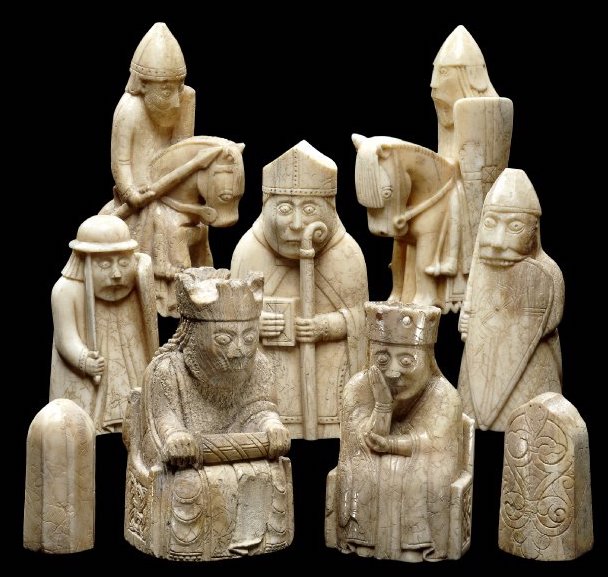
The Lewis Chessmen – Discovered in 1831 on the Isle of Lewis off the Scottish coast and carved in the 12th century from walrus tusks by Norse craft people, these chess pieces have charmed millions in the British and Royal Scottish Museums and have become part of popular culture (Harry Potter, Dr. Who, Walking Dead, Agatha Christie). This presentation examines the Lewis Chessmen and their place in the history of chess, and it explores their competing origin stories, which include Margret the Adroit, the greatest ivory carver in Iceland.

Friday Forum Fractal Fun – Join Al Biles as he does live coding in p5.js to generate fractals and other animations before your very eyes. Fractal fans will recognize the logistic map and Mandelbrot set (see zoom at left), along with the Gumkowski-Mira fractal. No programming experience is expected, but Al will start from scratch in p5 to hopefully entice some converts to what is likely the most accessible programming environment in existence.
 Al Biles